Show HN: Robust LLM Extractor for Websites in TypeScript
Robust Web Data Extractor Using LLMs and Browser Automation
Overview
Lightfeed Extractor is a Typescript library built for robust web data extraction using LLMs and Playwright. Use natural language prompts to navigate web pages and extract structured data. Get complete, accurate results with great token efficiency — critical for production data pipelines.
Features
-
🤖 Browser Automation in Stealth Mode - Launch Playwright browsers locally, in serverless clouds, or connect to a remote browser server. Avoid detection with built-in anti-bot patches and proxy configuration for reliable web scraping.
-
🧭 AI Browser Navigation - Pair with @lightfeed/browser-agent to navigate pages using natural language commands before extracting structured data.
-
🧹 LLM-ready Markdown - Convert HTML to LLM-ready markdown, with options to extract only main content and clean URLs by removing tracking parameters.
-
⚡️ LLM Extraction - Use LLMs in JSON mode to extract structured data according to input Zod schema. Token usage limit and tracking included.
-
🛠️ JSON Recovery - Sanitize and recover failed JSON output. This makes complex schema extraction much more robust, especially with deeply nested objects and arrays.
-
🔗 URL Validation - Handle relative URLs, remove invalid ones, and repair markdown-escaped links.
Tip
Building retail competitor intelligence at scale? Go to app.lightfeed.ai - our full platform for tracking competitor pricing, sales, promotions, and SEO across 1,000+ retail chains - get started for free. For generic web data pipelines with AI enrichment and workflow automation, check out lightfeed.ai.
Installation
Install the extractor:
npm install @lightfeed/extractor
Then install the LLM provider you want to use:
OpenAI
npm install @langchain/openai
Google Gemini
npm install @langchain/google-genai
Anthropic
npm install @langchain/anthropic
Ollama (local models)
npm install @langchain/ollama
@langchain/core will be installed automatically as a peer dependency.
Usage
E-commerce Product Extraction
This example demonstrates extracting structured product data from a real e-commerce website using a local headed Playwright browser. For production environments, you can use a Playwright browser in serverless or remote mode.
import { ChatGoogleGenerativeAI } from "@langchain/google-genai"; import { extract, ContentFormat, Browser } from "@lightfeed/extractor"; import { z } from "zod";
// Define schema for product catalog extraction const productCatalogSchema = z.object({ products: z .array( z.object({ name: z.string().describe("Product name or title"), brand: z.string().optional().describe("Brand name"), price: z.number().describe("Current price"), originalPrice: z .number() .optional() .describe("Original price if on sale"), rating: z.number().optional().describe("Product rating out of 5"), reviewCount: z.number().optional().describe("Number of reviews"), productUrl: z.string().url().describe("Link to product detail page"), imageUrl: z.string().url().optional().describe("Product image URL"), }) ) .describe("List of bread and bakery products"), });
// Create browser instance const browser = new Browser({ type: "local", // also supporting serverless and remote browser headless: false, });
try { await browser.start(); console.log("Browser started successfully");
// Create page and navigate to e-commerce site const page = await browser.newPage();
const pageUrl = "https://www.walmart.ca/en/browse/grocery/bread-bakery/10019\_6000194327359"; await page.goto(pageUrl);
try { await page.waitForLoadState("networkidle", { timeout: 10000 }); } catch { console.log("Network idle timeout, continuing..."); }
// Get HTML content const html = await page.content(); console.log(`Loaded ${html.length} characters of HTML`);
// Extract structured product data console.log("Extracting product data using LLM..."); const result = await extract({ llm: new ChatGoogleGenerativeAI({ apiKey: process.env.GOOGLE_API_KEY, model: "gemini-2.5-flash", temperature: 0, }), content: html, format: ContentFormat.HTML, sourceUrl: pageUrl, schema: productCatalogSchema, htmlExtractionOptions: { extractMainHtml: true, includeImages: true, cleanUrls: true } });
console.log("Extraction successful!"); console.log("Found products:", result.data.products.length);
// Print the extracted data console.log(JSON.stringify(result.data, null, 2));
} catch (error) { console.error("Error during extraction:", error); } finally { await browser.close(); console.log("Browser closed"); }
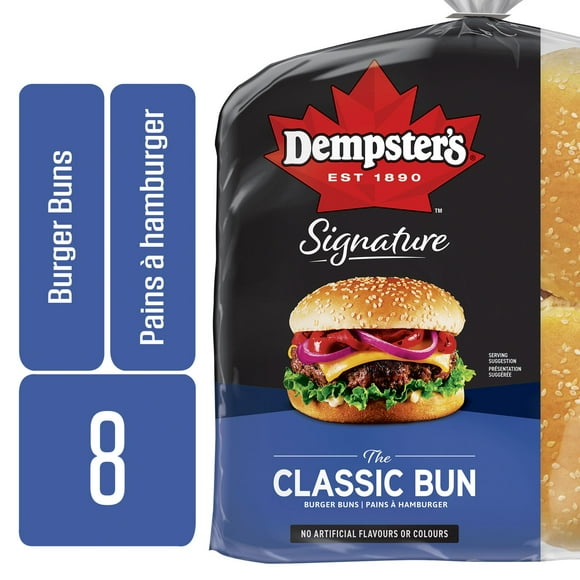
/* Expected output: { "products": [ { "name": "Dempster's® Signature The Classic Burger Buns, Pack of 8; 568 g", "brand": "Dempster's", "price": 3.98, "originalPrice": 4.57, "rating": 4.7376, "reviewCount": 141, "productUrl": "https://www.walmart.ca/en/ip/dempsters-signature-the-classic-burger-buns/6000188080451?classType=REGULAR&athbdg=L1300", "imageUrl": "https://i5.walmartimages.ca/images/Enlarge/725/979/6000196725979.jpg?odnHeight=580&odnWidth=580&odnBg=FFFFFF" }, ... (more products) ] } */
Using with Browser Agent
For pages that require interaction before extraction — searching, clicking through pagination, dismissing popups, etc. — you can pair this library with @lightfeed/browser-agent. The browser agent uses AI to navigate pages via natural language commands, and this library extracts structured data from the result.
Install both packages:
npm install @lightfeed/extractor @lightfeed/browser-agent
Then use the browser agent to navigate and the extractor to pull structured data:
import { BrowserAgent } from "@lightfeed/browser-agent"; import { ChatGoogleGenerativeAI } from "@langchain/google-genai"; import { extract, ContentFormat } from "@lightfeed/extractor"; import { z } from "zod";
const schema = z.object({ products: z.array( z.object({ name: z.string(), price: z.number(), rating: z.number().optional(), productUrl: z.string().url(), }) ), });
// 1. Use browser agent to navigate with AI const agent = new BrowserAgent({ browserProvider: "Local" }); const page = await agent.newPage(); await page.goto("https://amazon.com"); await page.ai("Search for 'organic coffee' and go to the second page of results");
// 2. Extract structured data from the resulting page const html = await page.content(); const result = await extract({ llm: new ChatGoogleGenerativeAI({ model: "gemini-2.5-flash", apiKey: process.env.GOOGLE_API_KEY, temperature: 0, }), content: html, format: ContentFormat.HTML, sourceUrl: page.url(), schema, prompt: "Extract all product listings from the search results", htmlExtractionOptions: { extractMainHtml: true, includeImages: true, cleanUrls: true, }, });
console.log(result.data.products); await agent.close();
The browser agent supports local, serverless, and remote browsers — see the browser-agent docs for configuration options.
Extracting from Markdown or Plain Text
You can also extract structured data directly from HTML, Markdown or text string. Pass any LangChain chat model:
import { ChatGoogleGenerativeAI } from "@langchain/google-genai"; import { extract, ContentFormat } from "@lightfeed/extractor";
const result = await extract({ llm: new ChatGoogleGenerativeAI({ apiKey: process.env.GOOGLE_API_KEY, model: "gemini-2.5-flash", temperature: 0, }), content: markdownContent, format: ContentFormat.MARKDOWN, schema: mySchema, });
Custom Extraction Prompts
You can provide a custom prompt to guide the extraction process:
const result = await extract({ llm: myLLM, content: htmlContent, format: ContentFormat.HTML, schema: mySchema, sourceUrl: "https://example.com/products", prompt: "Extract ONLY products that are on sale or have special discounts. Include their original prices, discounted prices, and product URL.", });
If no prompt is provided, a default extraction prompt will be used.
Extraction Context
You can use the extractionContext option to provide contextual information that enhances the extraction process. This context works alongside the content to enable more accurate and comprehensive data extraction. Common use cases include:
- Enriching partial data objects with missing information from the content
- Providing metadata like website URLs, user locations, timestamps for context-aware extraction
- Including domain-specific knowledge or constraints
- Merging data from multiple sources
The LLM will consider both the content and the extraction context when performing extraction:
// Example: Using extraction context with website metadata and geolocation const extractionContext = { websiteUrl: "https://acme.com/products/smart-security-camera", country: "Canada", city: "Vancouver" };
const schema = z.object({ title: z.string(), price: z.number(), storeName: z.string().describe("Store name in title case from website URL or context"), inStock: z.boolean().optional(), location: z.string().optional().describe("Location in the format of City, Country") });
const result = await extract({ llm: myLLM, content: htmlContent, format: ContentFormat.HTML, schema: schema, sourceUrl: "https://acme.com/products/smart-security-camera", extractionContext: extractionContext, });
// The LLM will use the context to extract store name (acme) and consider the location console.log(result.data); // { // title: "Smart Security Camera", // price: 74.50, // storeName: "Acme", // inStock: true, // location: "Vancouver, Canada" // }
Using Any LangChain Model
Pass any LangChain chat model via the llm option. Use OpenAI, Google Gemini, Anthropic, Mistral, Ollama, Azure OpenAI, AWS Bedrock, or any LangChain-supported provider:
// OpenAI import { ChatOpenAI } from "@langchain/openai"; const llm = new ChatOpenAI({ modelName: "gpt-4o-mini", apiKey: process.env.OPENAI_API_KEY });
// Google Gemini import { ChatGoogleGenerativeAI } from "@langchain/google-genai"; const llm = new ChatGoogleGenerativeAI({ model: "gemini-2.5-flash", apiKey: process.env.GOOGLE_API_KEY });
// Anthropic import { ChatAnthropic } from "@langchain/anthropic"; const llm = new ChatAnthropic({ model: "claude-sonnet-4-20250514", apiKey: process.env.ANTHROPIC_API_KEY });
// Ollama (local) import { ChatOllama } from "@langchain/ollama"; const llm = new ChatOllama({ model: "llama3" });
Managing Token Limits
Use maxInputTokens to truncate content when it exceeds the model's context window:
const result = await extract({ llm: new ChatOpenAI({ modelName: "gpt-4o-mini", apiKey: "..." }), content: markdownContent, format: ContentFormat.MARKDOWN, schema, maxInputTokens: 128000, // Roughly 128K tokens (4 chars/token) });
Warning
For OpenAI models, optional schema is not supported. Use .nullable() instead of .optional().
Extracting from Main HTML
For blog posts or articles with lots of navigation elements, headers, and footers, you can use the extractMainHtml option to focus on just the main content:
const result = await extract({ llm: myLLM, content: htmlContent, format: ContentFormat.HTML, schema: mySchema, htmlExtractionOptions: { extractMainHtml: true // Uses heuristics to remove navigation, headers, footers, etc. }, sourceUrl, });
Note
The extractMainHtml option only applies to HTML format. It uses heuristics to identify and extract what appears to be the main content area (like article or main tags). It's recommended to keep this option off (false) when extracting details about a single item (like detail page for a product) as it might remove important contextual elements.
Extracting Images from HTML
By default, images are excluded from the HTML extraction process to simplify the output. If you need to extract image URLs or references, you can enable the includeImages option:
// Define a schema that includes product images const productListSchema = z.object({ products: z.array( z.object({ name: z.string(), price: z.number(), description: z.string().optional(), // Include an array of images for each product image: z.object({ url: z.string().url(), alt: z.string().optional(), }).optional(), }) ), });
const result = await extract({ llm: myLLM, content: htmlContent, format: ContentFormat.HTML, schema: mySchema, htmlExtractionOptions: { includeImages: true // Includes images in the generated markdown }, sourceUrl: sourceUrl, });
URL Cleaning
The library can clean URLs to remove tracking parameters and unnecessary components, producing cleaner and more readable links. This is particularly useful for e-commerce sites that add extensive tracking parameters:
const result = await extract({ llm: myLLM, content: htmlContent, format: ContentFormat.HTML, schema: mySchema, htmlExtractionOptions: { cleanUrls: true // Enable URL cleaning to remove tracking parameters }, sourceUrl: "https://amazon.ca/s?k=vitamins", }); // Amazon URLs like "https://www.amazon.com/Product/dp/B123/ref=sr\_1\_47?dib=abc" // become "https://www.amazon.com/Product/dp/B123"
Note
Currently, URL cleaning supports Amazon product URLs (amazon.com, amazon.ca) by removing /ref= parameters and everything after. The feature is designed to be extensible for other e-commerce platforms in the future.
LLM Extraction Function
LLM Configuration
Pass a LangChain chat model instance via the llm option. Install the LangChain integration for your provider (e.g. @langchain/openai, @langchain/google-genai, @langchain/anthropic) and configure API keys on the model instance.
extract<T>(options: ExtractorOptions<T>): Promise<ExtractorResult<T>>
Main function to extract structured data from content.
Options
Option
Type
Description
Default
llm
BaseChatModel
A LangChain chat model instance (ChatOpenAI, ChatGoogleGenerativeAI, ChatAnthropic, etc.)
Required
content
string
HTML, markdown, or plain text content to extract from
Required
format
ContentFormat
Content format (HTML, MARKDOWN, or TXT)
Required
schema
z.ZodTypeAny
Zod schema defining the structure to extract
Required
prompt
string
Custom prompt to guide the extraction process
Internal default prompt
htmlExtractionOptions
HTMLExtractionOptions
HTML-specific options for content extraction see below
{}
sourceUrl
string
URL of the HTML content, required when format is HTML to properly handle relative URLs
Required for HTML format
maxInputTokens
number
Maximum number of input tokens to send to the LLM. Uses a rough conversion of 4 characters per token. When specified, content will be truncated if the total prompt size exceeds this limit.
undefined
extractionContext
Record<string, any>
Extraction context that provides additional information for the extraction process. Can include partial data objects to enrich, metadata like URLs/locations, or any contextual information relevant to the extraction task.
undefined
htmlExtractionOptions
Option
Type
Description
Default
extractMainHtml
boolean
When enabled for HTML content, attempts to extract the main content area, removing navigation bars, headers, footers, sidebars etc. using heuristics. Should be kept off when extracting details about a single item.
false
includeImages
boolean
When enabled, images in the HTML will be included in the markdown output. Enable this when you need to extract image URLs or related content.
false
cleanUrls
boolean
When enabled, removes tracking parameters and unnecessary URL components to produce cleaner links. Currently supports cleaning Amazon product URLs by removing /ref= parameters and everything after. This helps produce more readable URLs in the markdown output.
false
Return Value
The function returns a Promise that resolves to an ExtractorResult<T> object:
interface ExtractorResult<T> { data: T; // Extracted structured data processedContent: string; // Processed content that was sent to the LLM. Markdown if the input was HTM (after conversion) usage: { // Token usage statistics inputTokens?: number; outputTokens?: number; }; }
Browser Automation
The Browser class provides a clean interface for loading web pages with Playwright. Use it with direct Playwright calls to load HTML content before extracting structured data.
Constructor
const browser = new Browser(config?: BrowserConfig)
Methods
Method
Description
Returns
start()
Start the browser instance
Promise<void>
close()
Close the browser and clean up resources
Promise<void>
newPage()
Create a new page (browser must be started)
Promise<Page>
newContext()
Create a new browser context (browser must be started)
Promise<BrowserContext>
isStarted()
Check if the browser is currently running
boolean
Local Browser
Use your local Chrome browser for development and testing. Perfect for:
- Local development and debugging
- Testing automation scripts
- Quick prototyping
import { Browser } from "@lightfeed/extractor";
const browser = new Browser({ type: "local", headless: false, // Show browser window for debugging });
Serverless Browser
Perfect for AWS Lambda and other serverless environments. Uses @sparticuz/chromium to run Chrome in serverless environments with minimal cold start times and memory usage. Supports proxy configuration for geo-tracking and unblocking.
Important
This project uses Playwright, which ships with a specific version of Chromium. You need to install the matching version of @sparticuz/chromium.
For running on AWS Lambda, lambda layer with ARM64 architecture is preferred.
import { Browser } from "@lightfeed/extractor"; import chromium from "@sparticuz/chromium";
const browser = new Browser({ type: "serverless", executablePath: await chromium.executablePath(), options: { args: chromium.args, }, // Use proxy (optional) proxy: { host: "proxy.example.com", port: 8080, auth: { username: "user", password: "pass" } } });
Remote Browser
Connect to any remote browser instance via WebSocket. Great for:
- Brightdata's Scraping Browser
- Custom browser instances in the cloud
- Browser farms and proxy services
import { Browser } from "@lightfeed/extractor";
const browser = new Browser({ type: "remote", wsEndpoint: "ws://your-remote-browser:9222/devtools/browser/ws", options: { timeout: 30000 } });
HTML to Markdown Conversion
The convertHtmlToMarkdown utility function allows you to convert HTML content to markdown without performing extraction.
Function signature:
convertHtmlToMarkdown(html: string, options?: HTMLExtractionOptions, sourceUrl?: string): string
Parameters
Parameter
Type
Description
Default
html
string
HTML content to convert to markdown
Required
options
HTMLExtractionOptions
undefined
sourceUrl
string
URL of the HTML content, used to properly convert relative URLs to absolute URLs
undefined
Return Value
The function returns a string containing the markdown conversion of the HTML content.
Example
import { convertHtmlToMarkdown, HTMLExtractionOptions } from "@lightfeed/extractor";
// Basic conversion const markdown = convertHtmlToMarkdown("Hello WorldThis is a test"); console.log(markdown); // Output: "Hello World\n===========\n\nThis is a test"
// With options to extract main content, include images, and clean URLs const options: HTMLExtractionOptions = { extractMainHtml: true, includeImages: true, cleanUrls: true // Clean URLs by removing tracking parameters };
// With source URL to handle relative links const markdownWithOptions = convertHtmlToMarkdown( ` Header About Amazon Product Footer content
JSON Recovery
The safeSanitizedParser utility function helps sanitize and recover partial data from LLM outputs that may not perfectly conform to your schema.
Function signature:
safeSanitizedParser<T>(schema: ZodTypeAny, rawObject: unknown): z.infer<T> | null
import { safeSanitizedParser } from "@lightfeed/extractor"; import { z } from "zod";
// Define a product catalog schema const productSchema = z.object({ products: z.array( z.object({ id: z.number(), name: z.string(), // Required field price: z.number().optional(), // Optional number inStock: z.boolean().optional(), category: z.string().optional(), }) ), storeInfo: z.object({ name: z.string(), location: z.string().optional(), rating: z.number().optional(), }) });
// Example LLM output with realistic validation issues const rawLLMOutput = { products: [ { id: 1, name: "Laptop", price: 999, inStock: true, }, // Valid product { id: 2, name: "Headphones", price: "N/A", // Non-convertible string for optional number inStock: true, category: "Audio", }, { id: 3, // Missing required "name" field price: 45.99, inStock: false }, { id: 4, name: "Keyboard", price: 59.99, inStock: true } // Valid product ], storeInfo: { name: "TechStore", location: "123 Main St", rating: "N/A" // Invalid: rating is not a number } };
// Sanitize the data to recover what's valid const sanitizedData = safeSanitizedParser(productSchema, rawLLMOutput);
// Result: // { // products: [ // { // id: 1, // name: "Laptop", // price: 999, // inStock: true, // }, // { // id: 2, // name: "Headphones", // inStock: true, // category: "Audio", // }, // { // id: 4, // name: "Keyboard", // price: 59.99, // inStock: true, // } // ], // storeInfo: { // name: "TechStore", // location: "123 Main St", // } // }
This utility is especially useful when:
- LLMs return non-convertible data for optional fields (like "N/A" for numbers)
- Some objects in arrays are missing required fields
- Objects contain invalid values that don't match constraints
- You want to recover as much valid data as possible while safely removing problematic parts
URL Validation
The library provides robust URL validation and handling through Zod's z.string().url() validator:
const schema = z.object({ title: z.string(), link: z.string().url(), // Full URL validation works! sources: z.array(z.string().url()) // Also works with arrays of URLs });
const result = await extract({ llm: myLLM, content: markdownContent, format: ContentFormat.MARKDOWN, schema, // ... other options });
How URL Validation Works
Our URL validation system provides several key benefits:
- Validation: Uses Zod's built-in
url()validator to ensure URLs are properly formatted - Special Character Handling: Automatically fixes URLs with escaped special characters in markdown (e.g.,
https://example.com/meeting-\(2023\)becomeshttps://example.com/meeting-(2023)) - Relative URL Resolution: Converts relative URLs to absolute URLs when
sourceUrlis provided - Invalid URL Handling: Skips invalid URLs rather than failing the entire extraction using our
safeSanitizedParser
This approach ensures reliable URL extraction while maintaining the full power of Zod's schema validation.
Development
Setup
- Clone the repository
- Install dependencies with
npm install - Create a
.envfile in the root directory with your API keys (see.env.example)
Scripts
npm run build- Build the librarynpm run clean- Remove build artifactsnpm run test- Run all tests (requires API keys for integration tests)npm run dev- Run the example file
Running Local Tests
You can test the library with real API calls and sample HTML files:
Run all local tests with both providers
npm run test:local
Run specific test type with both providers
npm run test:local -- blog npm run test:local -- product
Run tests with a specific provider
npm run test:local -- blog openai # Test blog extraction with OpenAI npm run test:local -- product gemini # Test product extraction with Google Gemini
Testing
The library includes both unit tests and integration tests:
- Unit tests: Test individual components without making API calls
- Integration tests: Test full extraction pipeline with real API calls
Integration tests require valid API keys to be provided in your .env file or environment variables. Tests will fail if required API keys are not available.
Each integration test runs with both Google Gemini and OpenAI to ensure compatibility across providers.
HTML to Markdown Integration Tests
This project includes comprehensive integration tests for the HTML to Markdown converter using real-world HTML samples. The tests validate three conversion types:
- Basic conversion (no images)
- Main content extraction (no images)
- Conversion with images included
These tests use a Git submodule with HTML files and groundtruth markdown files. The submodule is not downloaded by default to keep the repository lightweight. To run these tests:
First time: Initialize and download the test data submodule
npm run test:html2md:update
Run the HTML to Markdown integration tests
npm run test:html2md
Update test data if new test files are available
npm run test:html2md:sync
The test suite automatically discovers all available test files and creates test cases for each conversion type that has a corresponding groundtruth file.
Running Specific Tests
You can run individual tests by using the -t flag with a pattern that matches the test description:
Run a specific test by exact description
npm run test -- -t "should extract blog post data using Google Gemini default model"
Run all tests that include a specific keyword
npm run test -- -t "blog post"
Run all tests for a specific provider
npm run test -- -t "OpenAI"
Run all unit tests for a specific utility
npm run test -- -t "safeSanitizedParser"
Run specific HTML to Markdown tests
npm run test -- -t "should convert forum/tech-0 to markdown"
The -t flag uses pattern matching, so you can be as specific or general as needed to select the tests you want to run.
Hosted Version
While this library provides a robust foundation for data extraction, you might want to consider app.lightfeed.ai if you need:
- 💰 Pricing Intelligence - Track and compare competitor prices, sales, and promotions across retailer chains and store locations
- 🛡️ MAP & Brand Monitoring - Detect MAP violations across your distribution network with instant alerts
- 🔍 Product Discovery - Automatically match SKUs across retailers and discover comparable competitor products at scale
- 📈 SEO Intelligence - Monitor competitor product SEO strategies, keywords, and content patterns
- 📍 Store-level Data - Access data across 1,000+ retailers including Home Depot, Lowe's, Walmart, Costco, and more
For generic web data pipelines beyond retail, lightfeed.ai offers:
- 🤖 AI Enrichment - Enrich any data point: contact info, product details, company intelligence, and more
- 📍 Geolocation Targeting - Capture region-specific price, inventory and campaign data for competitive intelligence
- ⏰ Workflow Automation - Set up intelligent data pipelines that run automatically on your schedule
- 📊 Deduplication and Value History - Maintain consistent data with automatic change tracking
- ⚡️ Database with API - Manage data in a production-ready vector database with real-time API
- 🥷 Premium Proxies and Anti-bot - Automatically handle CAPTCHAs and proxy rotation without intervention
Support
If you need direct assistance with your implementation:
- Email us at support@lightfeed.ai
- Open an issue in this repository
- Post your question in our Discord community
License
Apache 2.0
Source: Hacker News